
nPZero Stamp
Minimum circuit for fast prototyping
Prove your concept fast, with nPZero on board
Minimum effort using ready-made module
A powerful solution for prototypes and proof-of-concepts using the nPZero power-saving IC
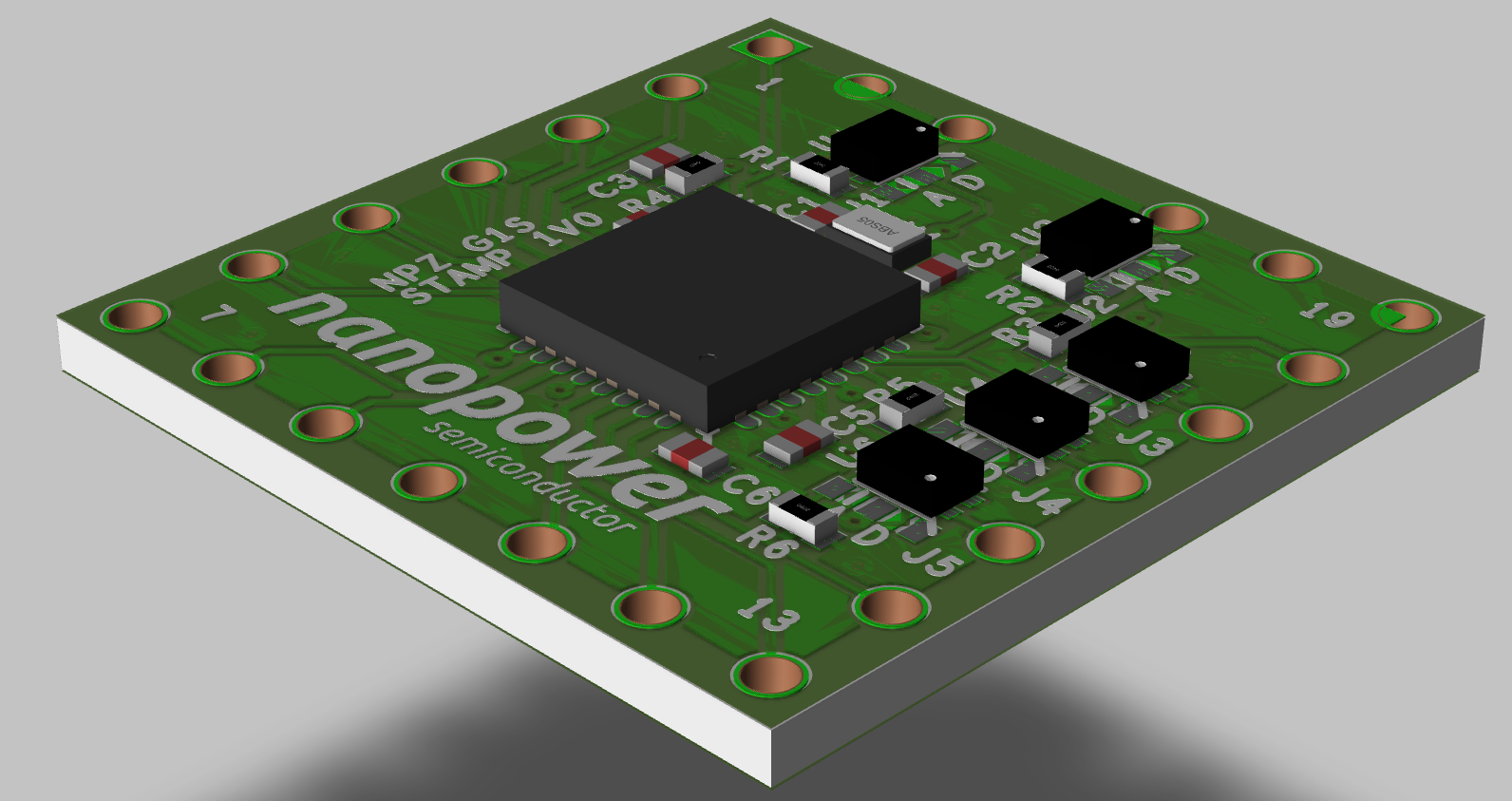
The Stamp is designed with the necessary circuitry and components to be implemented with minimal effort in prototypes.
Simply solder on the nPZero Stamp, and you have a system with nPZero power-saving capabilities.
-
Prototype with any host MCU or wireless chip
-
Reduce the power consumption of your prototype
-
Includes the required circuitry and components for nPZero IC
What is the nPZero Stamp
Nanopower | nPZero power-saving IC
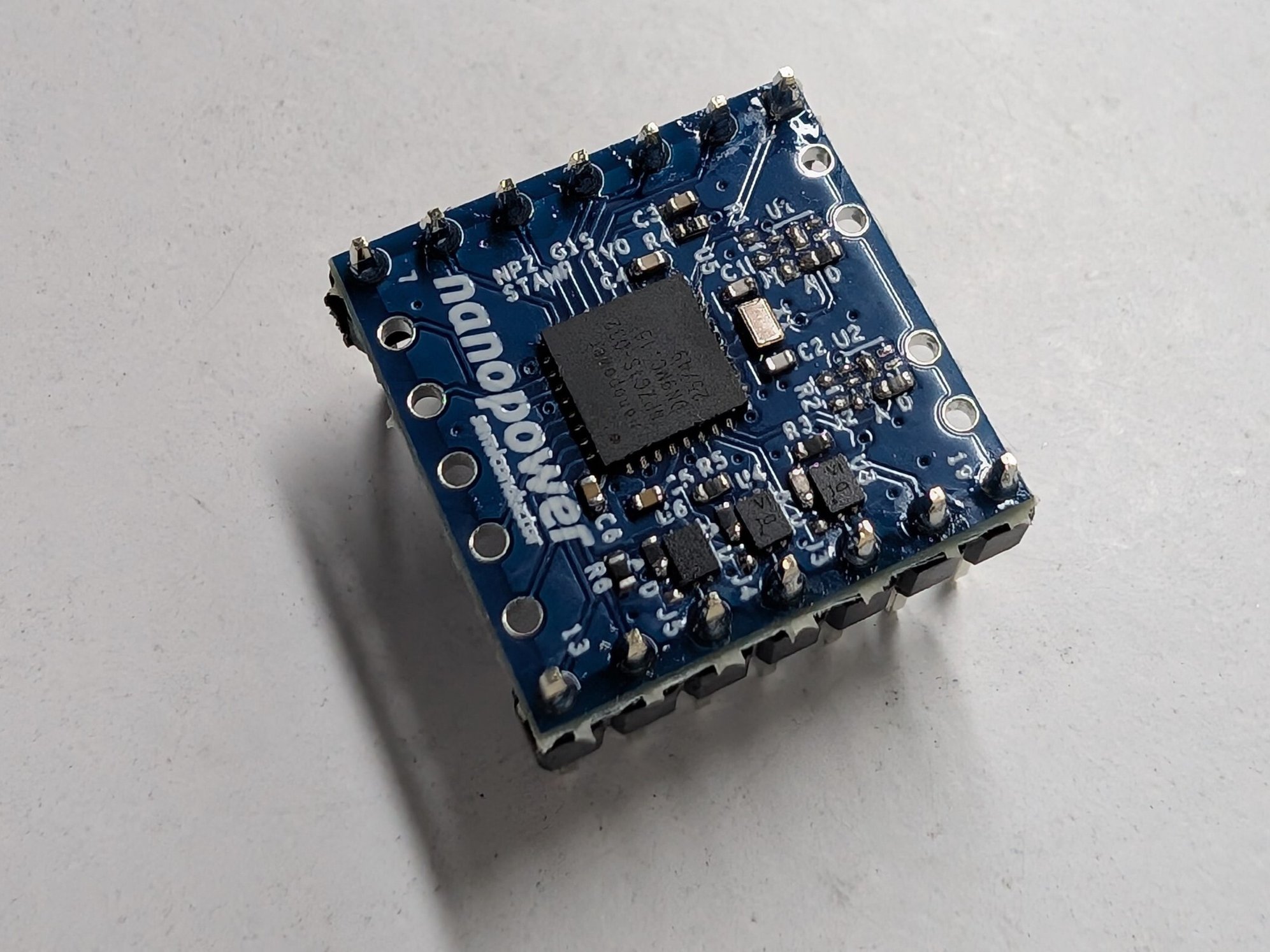
The nPZero G1S Stamp is a compact 15×15 mm module designed to simplify evaluation and integration of the nPZero power-saving IC. It enables developers to test the IC directly on a PCB or breadboard without requiring a complex prototype setup.
The nPZero Stamp module includes the minimum circuitry and components needed to run a system with the nPZero power-saving IC. It allows connection to a host MCU and up to four peripherals, making it suitable for most IoT systems.
Its small footprint and straightforward pin access make it ideal for rapid prototyping, validation, and firmware development involving power control.
Documentation is available on DevPortal
Description
The nPZero Stamp is a module including all necessary circuitry and components required to implement the nPZero IC in your design. This Stamp combines ultra-low power consumption with autonomous operation, making it perfect for prototypes and proof-of-concept where sleep mode power consumption is critical.
The nPZero Stamp can be connected via jumpers or soldered directly onto a custom PCB, lowering the efforts of a successful prototype to the absolute minimum.
The onboard nPZero IC can autonomously power up sensor peripherals, read data, and wake up the system as needed. It manages the system without an active MCU host by taking over the controller role, powering down the host, and autonomously handling power-up, configuration, and reading of peripheral data from up to 4 sensors. When required, it will power up the host and return control based on user-defined rules.
This allows the host to remain off for longer periods while the system continues to detect and respond to events, conserving energy. It significantly reduces power consumption compared to other options, both in active and sleep modes, when managing peripherals.
Features
-
- 15x15 mm means it can be integrated in small prototypes
- Compatible with breadboards and custom PCBs
- Compatible with one I2C MCU host
- Supports up to four peripheral sensors
- I2C and SPI supported for peripheral communication
- Flexible I/O pins can be used as interrupt inputs or trigger outputs
- Autonomous sensor polling with threshold-based triggers
- Ultra-low power operation
- Crystal oscillator with programmable clock output
- ADC with two channels: one internally connected to VBAT, and one external input on pin
ADC_IN - 128-byte internal SRAM for initialization commands for the peripherals
- Operates in a range from 1.7 V to 3.6 V
- Operating conditions range from -20˚C to +70˚C
- Integrated power switches allow power gating of the host and peripherals